Stay between the puck and your net. Switch to a closer skater when the play moves away, then decide whether to keep skating, check the carrier, or dive into a shot.
Without the puck
Three right-side gestures
Use the left side to steer. These right-side actions apply when your team does not have possession.
Make the flick quick. A slow drag will not start a defensive action. Lift your thumb after the flick. Aim mostly sideways for a check and mostly down for a dive.
01 / Stay near the play
Switch to the puck, then steer
A right tap selects the available skater nearest the puck. It does not cycle through the team. If you already control the nearest skater, another tap keeps that skater selected.
Switch when a pass or loose puck leaves another teammate closer. Check where the selection ring moves before steering. A skater who is diving or knocked down is skipped.
Your next steering input applies to this teammate. Judge the gap again before trying a check.
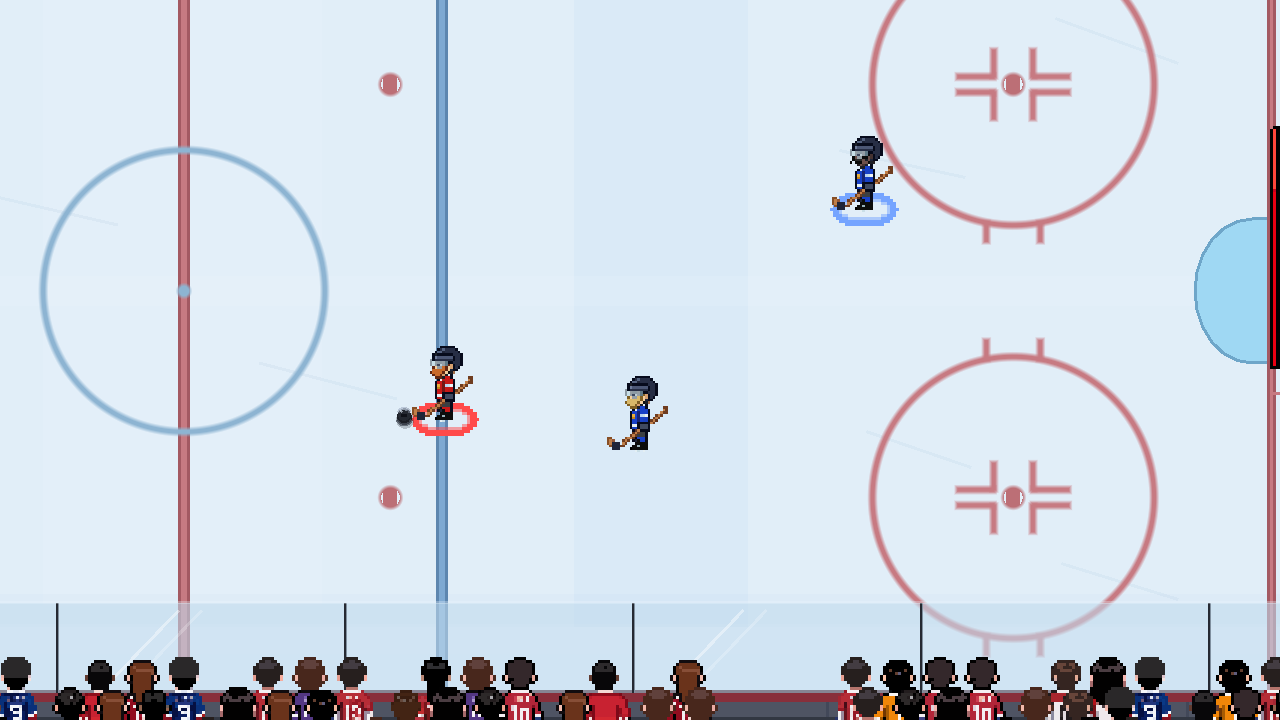
▶Watch the switching clip3 sec · Silent+
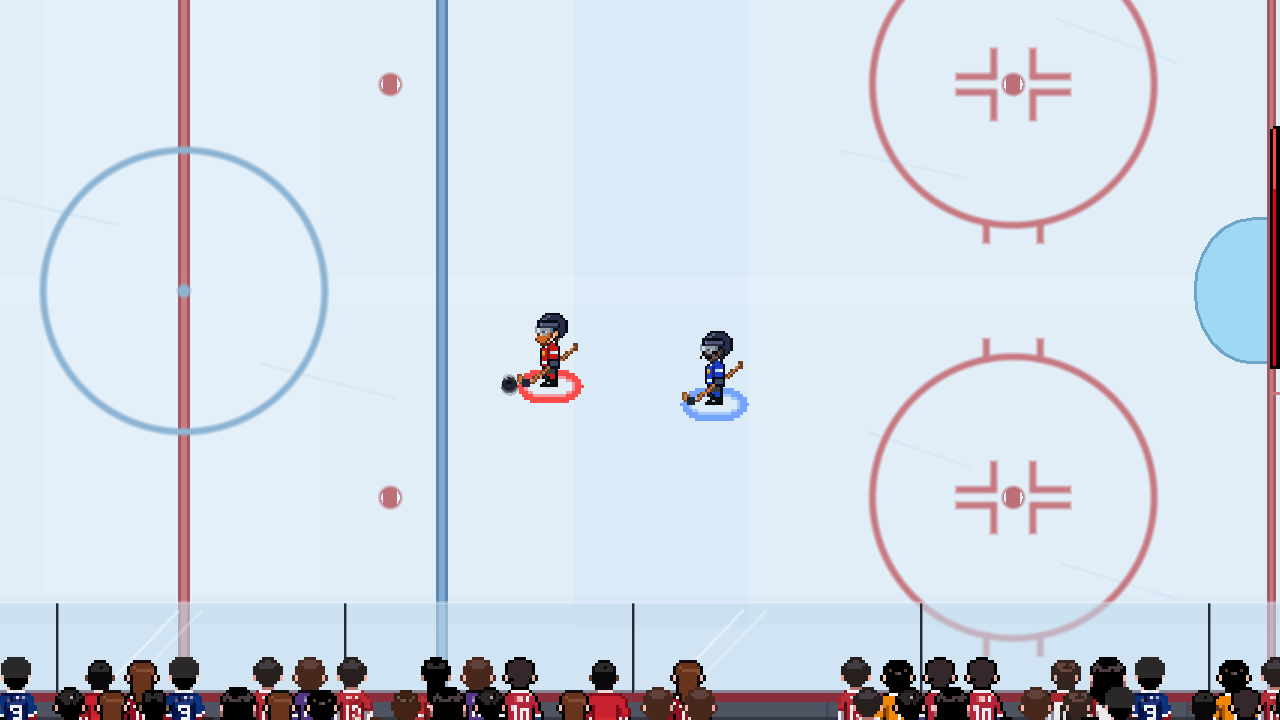
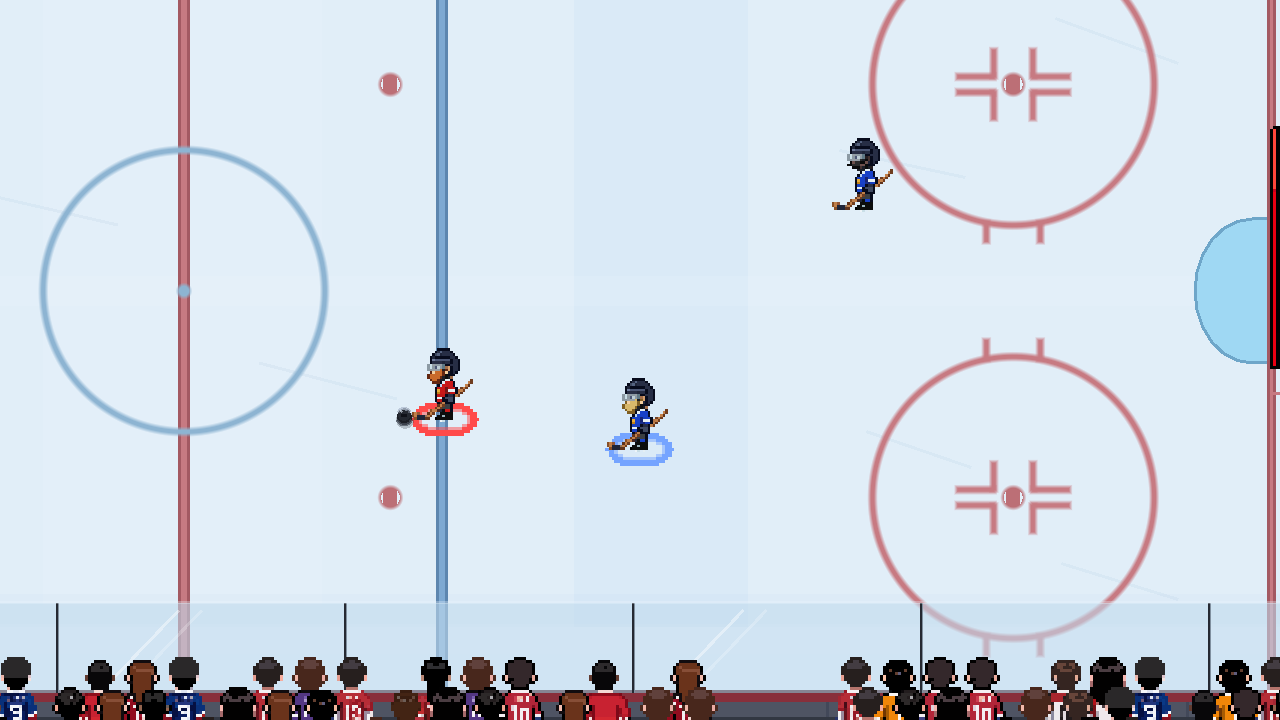
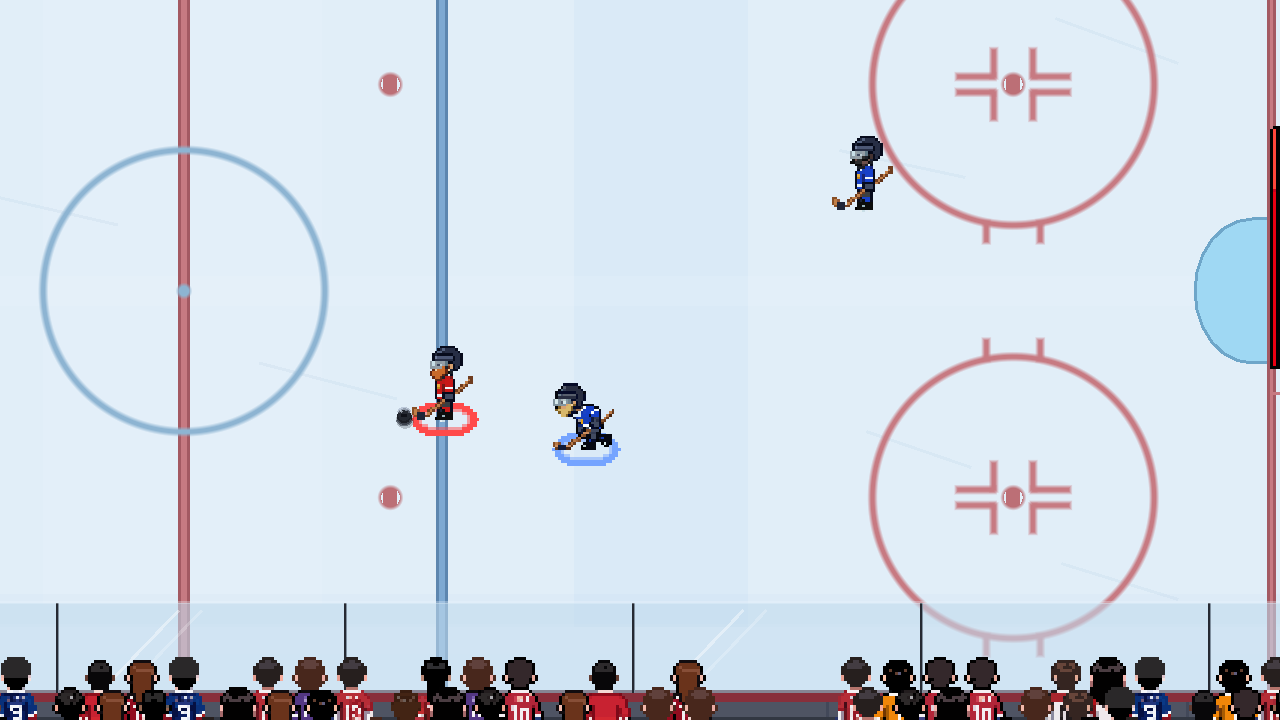
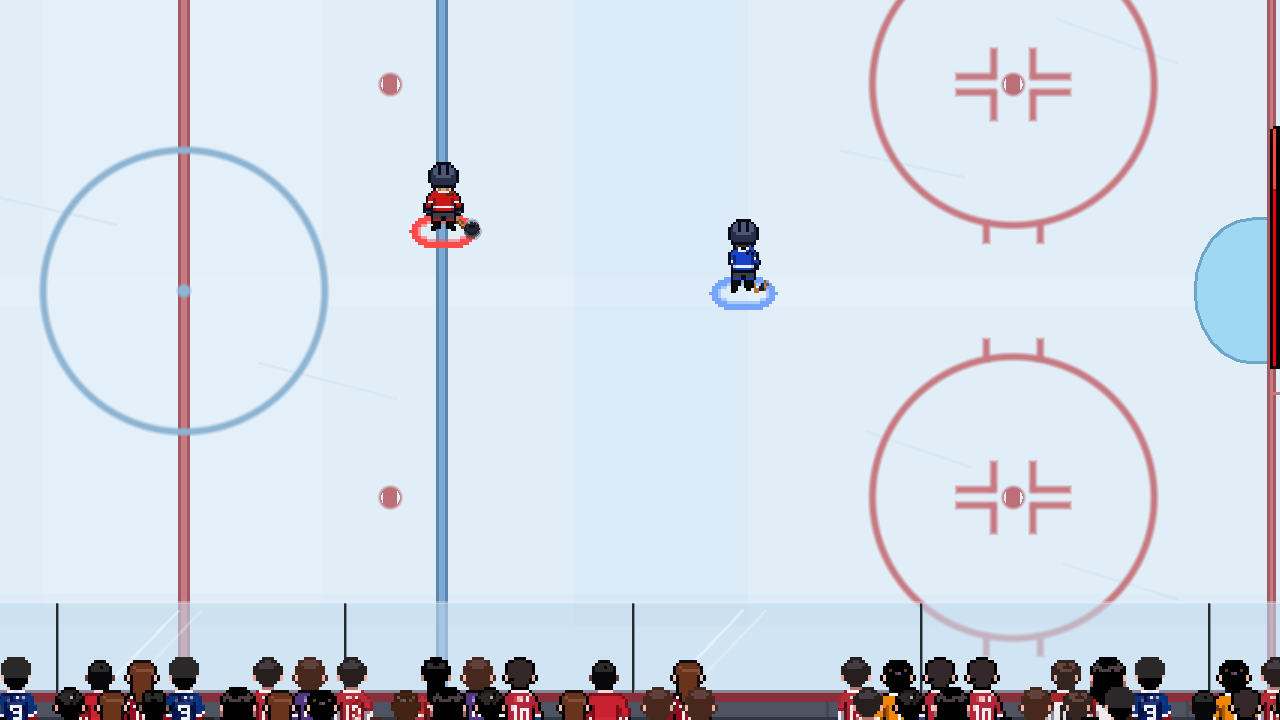
The selected blue skater starts farther from the puck. A right tap moves the selection ring to the closer blue teammate. The next left-side input steers that teammate toward the play.
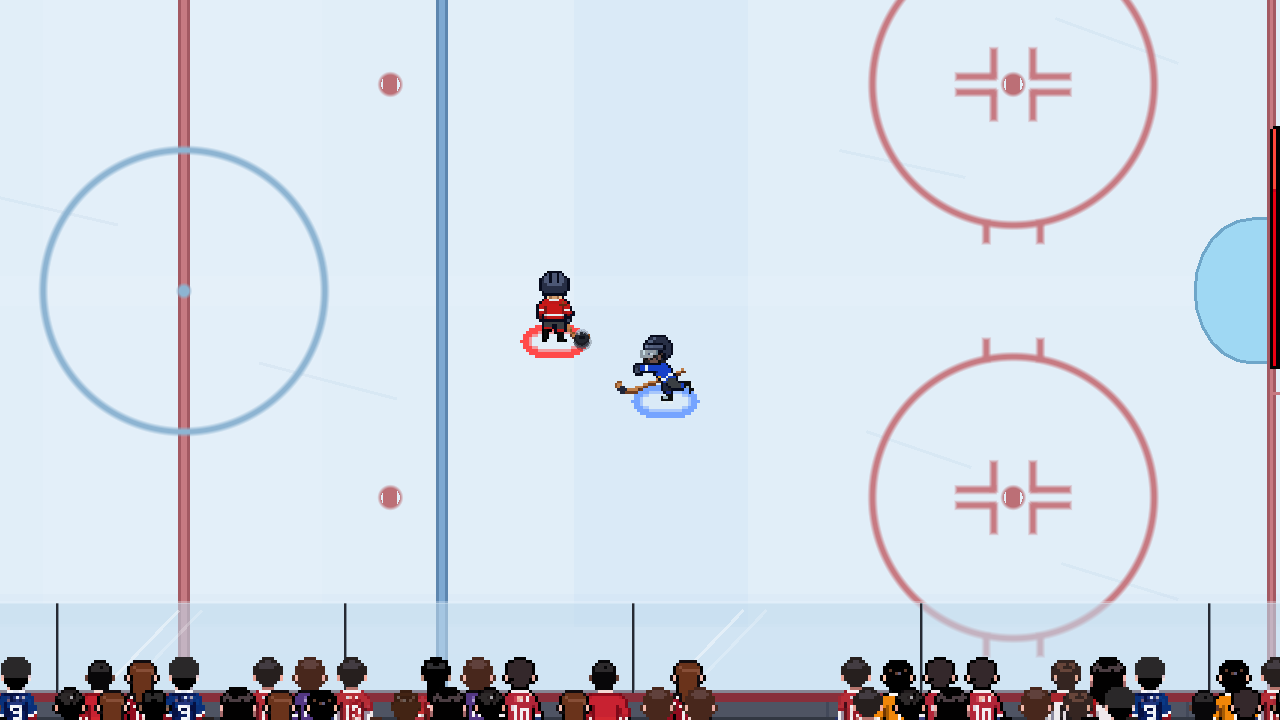
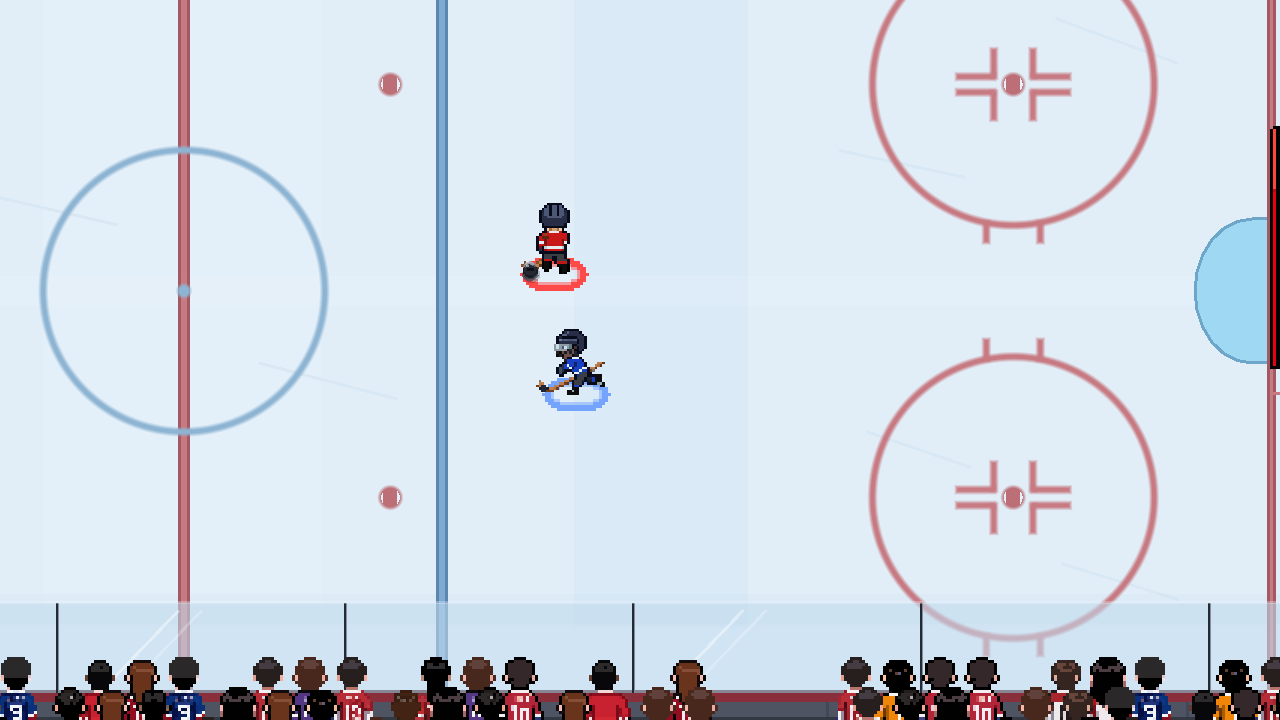
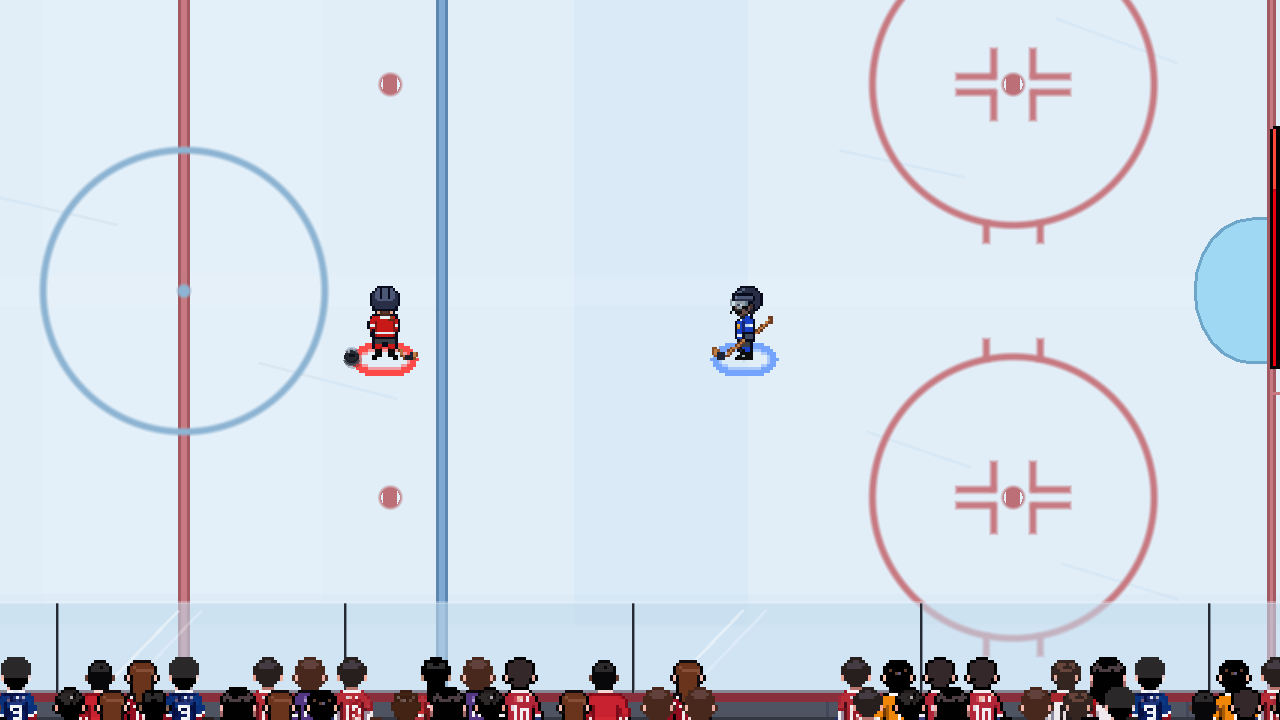
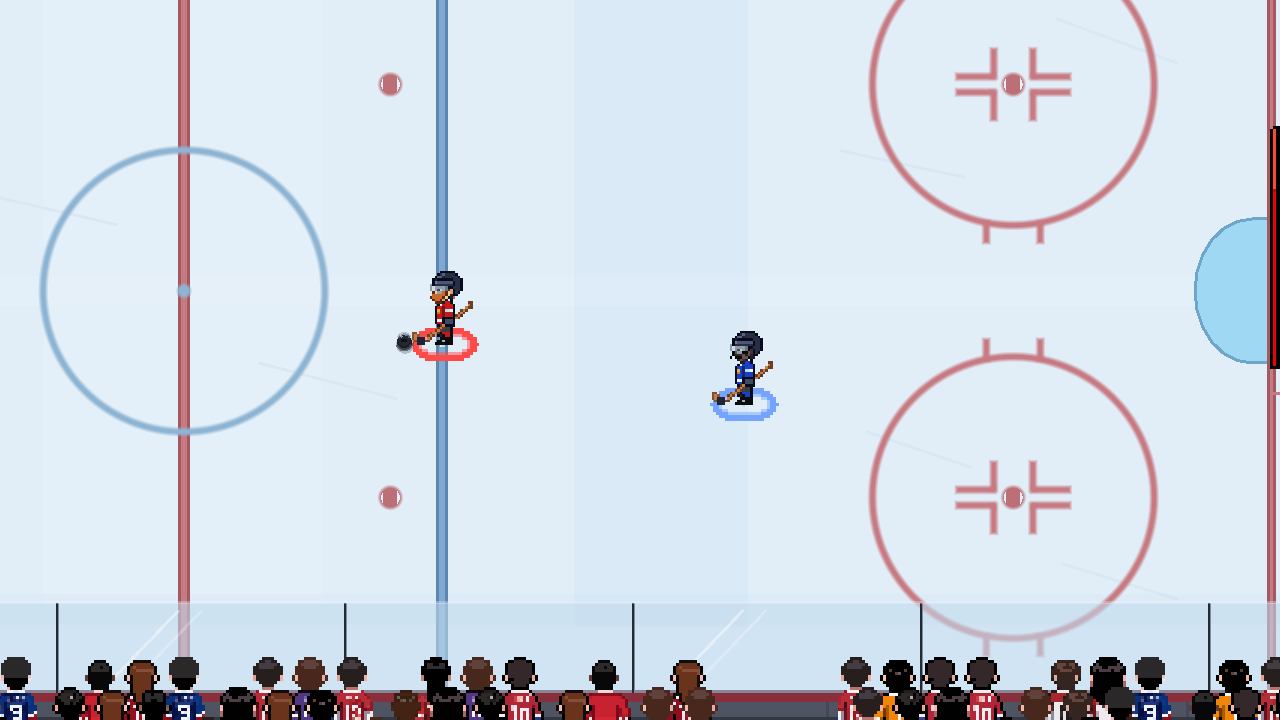
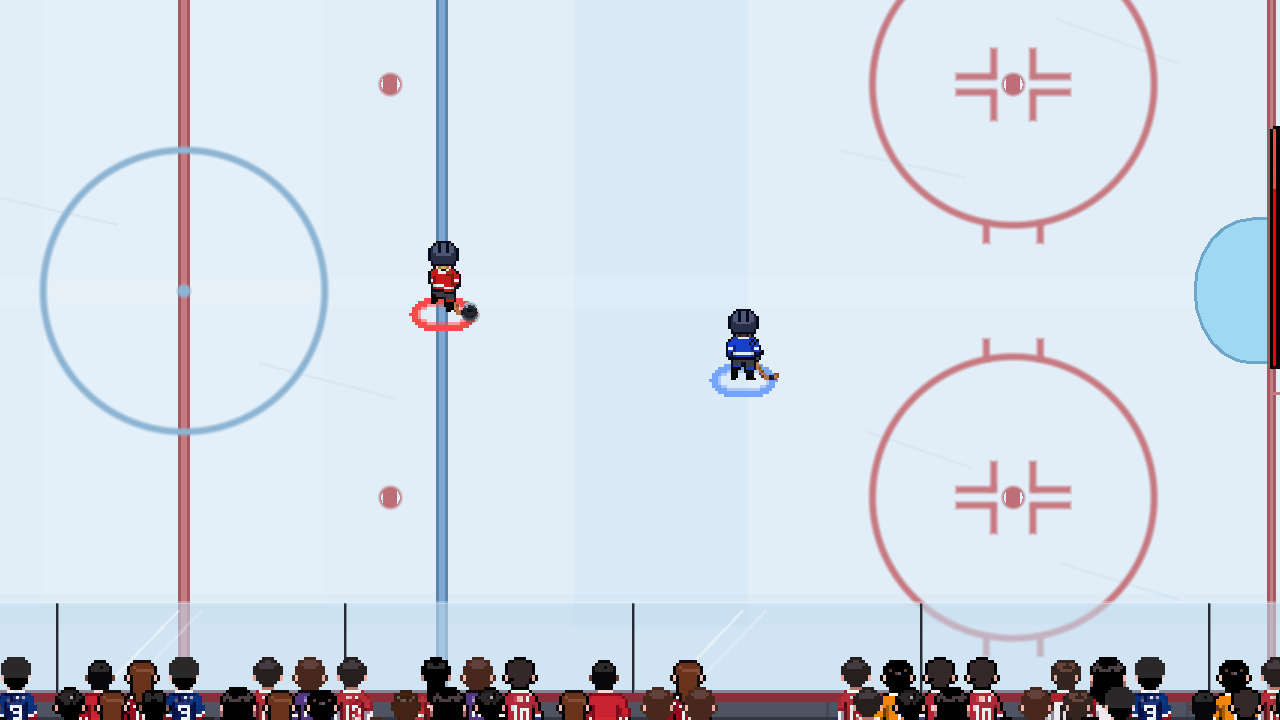
Real development build captures. These drills use staged positions and automated touch input. Blue is your team. Red is the opponent. The numbered pointers are website annotations.
02 / Choose your action
Keep your skates or commit
Start by covering the route to your net. A check or dive can interrupt a play, but each takes time to finish. Look at the space you will leave behind.
01
Left side / Steer
Stay in position
Use it when you still have room to stay between the carrier and your net. Follow the play without rushing straight at the puck.
What you give up is immediate pressure on the carrier. You keep the ability to turn, but momentum still carries you while you change direction.
There is no check or dive to finish. You can keep steering, while allowing for your skating momentum.
▶Watch the positioning clip3.5 sec · Silent+
Blue starts between the red carrier and the net on the right. Red moves up the rink. Blue stays upright and keeps room between them instead of committing to a check or dive.
Use it when an opponent with the puck is close. Flick left or right toward the opponent. The gesture can also target an opponent contesting a nearby loose puck.
The commitment is a shoulder check with less freedom to turn. A miss adds a short recovery with extra drag and slower turning. You cannot immediately check again.
Blue has missed. Turning is restricted for a short recovery, giving the carrier room to escape.
▶Watch the checking clip1.9 sec · Silent+
Blue attempts a check after a horizontal right flick. Red skates upward and escapes the contact. Blue finishes the shoulder motion and recovers while red keeps the puck.
Contact does not promise possession. Speed and player ratings affect the impact. A check can stagger the carrier, knock them down, or miss. Even a loose puck still needs to be collected.
03
Right side / Flick down
Dive across a shot’s path
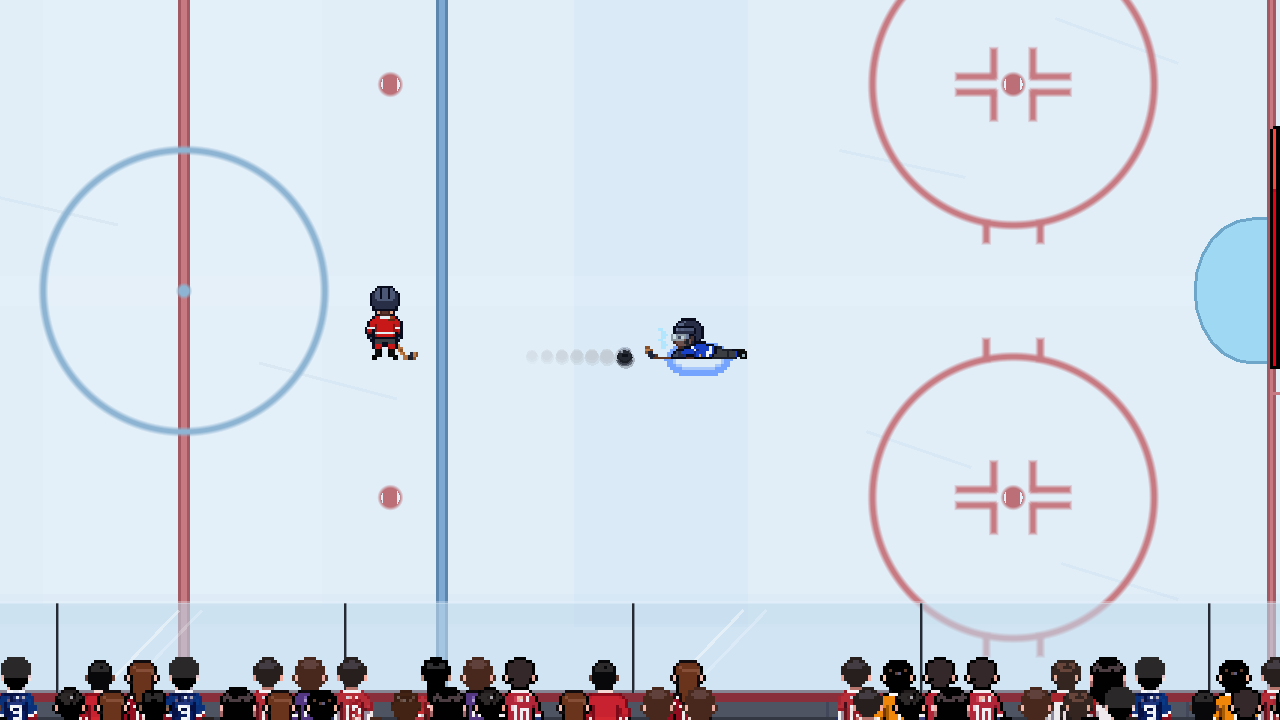
Use it when you can get into the path of the puck. Flick down to start the dive. The skater dives toward the puck’s position at that moment, not toward the bottom of the screen.
The commitment is a crouch, push, slide, and recovery. You cannot steer the prone slide, pick up the puck, or check during the dive. Get your position right before you commit.
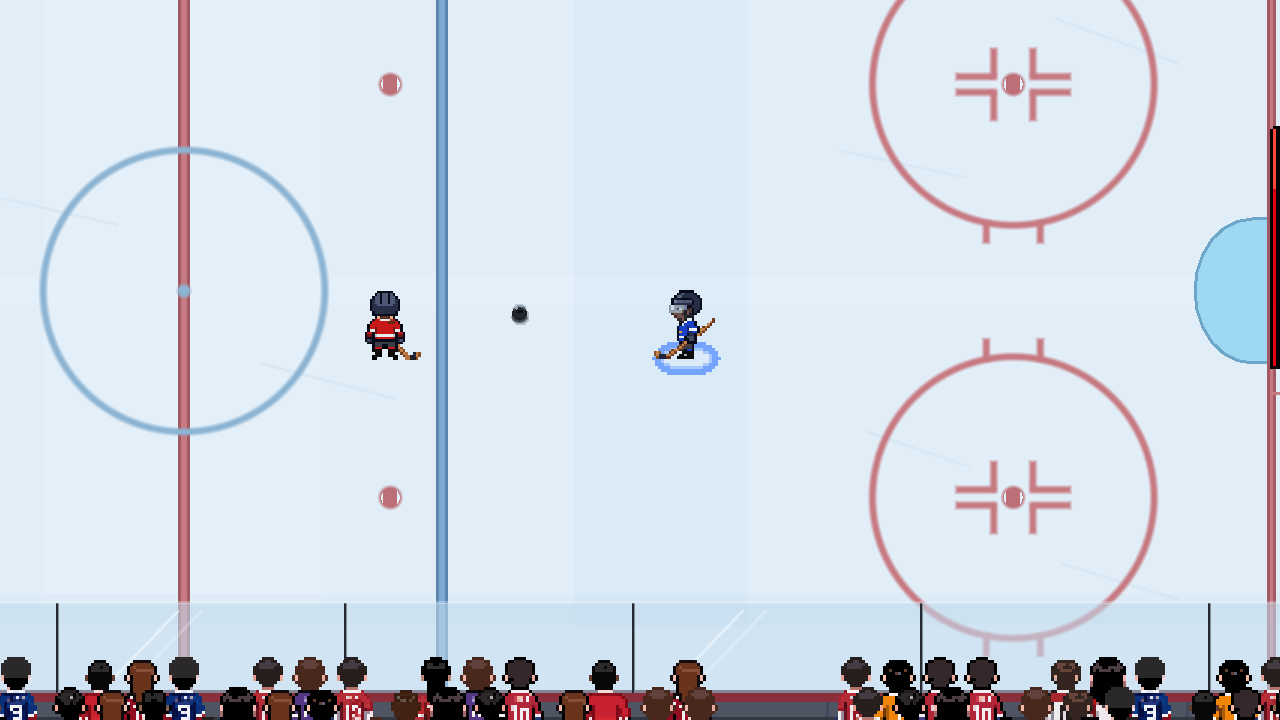
The puck has deflected away. Blue must finish getting up before skating after it or picking it up.
▶Watch the shot block clip2.4 sec · Silent+
With red in possession, a downward right flick sends blue diving toward the puck on the left. The incoming shot hits the diving skater and deflects away. Blue gets back onto their skates as the puck stays loose.
Follow the rebound. A block can deflect the puck without giving your team possession. Your next steering input is kept for recovery. A cooldown also prevents an immediate second dive.
03 / Know your skater
Ratings change the result
Good timing still matters. These attributes affect what happens after you choose an action.
Strength
Higher Strength adds force to checks and helps a skater resist contact. Skating speed and the opponent’s movement still affect the hit.
Balance
Higher Balance helps with turning and resistance to knockdowns. It shortens recovery from a missed check and helps the skater regain control after a dive.
Stamina
Low stamina reduces skating speed. Leave yourself room to follow the play instead of relying on a late chase. Stamina drains during time on the ice.
PixelPuck is in development for iPhone. There is no public App Store release date yet. You can email the developer about future testing opportunities. Android is planned, with no release date announced.
 Position
 Action
 Next move